CONTENT DESIGN › GOOGLE
Content Designer, working with the engineering, marketing, PR and localisation teams.
When the Google Assistant arrived in Italy, it had to be useful and familiar from day one. Translating its replies wasn’t enough: it needed a character that Italians would recognise as their own. I defined the Assistant’s personality and wrote the original content it used to introduce itself, answer curiosities and handle the most delicate conversations. A personality isn’t described to users: it reveals itself through interaction, as it does between people.
A consistent personality in every kind of conversation, from practical questions and jokes to insults, captured in a style guide that made it possible to write every new reply in the same voice.
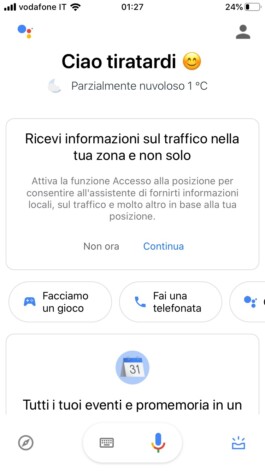
A greeting that changes with the time of day
Screen 1
Hi, night owl 😊
Partly cloudy, 1°C
Get traffic information for your area and more
Turn on Location Access to let the Assistant give you local information, traffic updates and much more based on your location.
Not now · Continue
Let’s play a game · Make a phone call
All your events and reminders in one… [partly visible]
The experience begins before the first question. “Hi, night owl” connects the greeting to the time the Assistant is opened: a choice of tone that accompanies the information and features on the home screen.
Introducing itself without making the conversation stiff
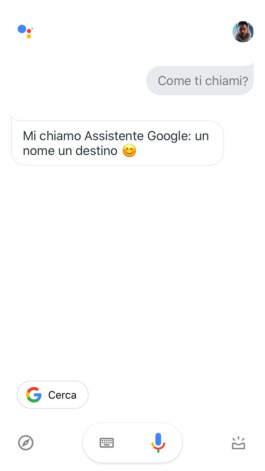
Screen 1
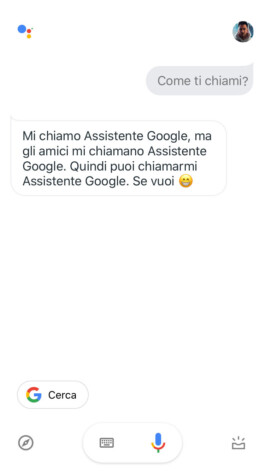
What’s your name?
My name is Google Assistant: the name says it all 😊
Screen 2
What’s your name?
My name is Google Assistant, but my friends call me Google Assistant. So you can call me Google Assistant. If you like 😁
In response to the simplest question, the Assistant has two different replies: a short joke, or an ironic emphasis on its own name. Both remain clear and recognisable as part of a product, while opening the conversation with a less impersonal voice.
I gave it a personality without making it a person
Screen 1
Where do you live?
I go back and forth between the cloud and your device. I’m a commuter 2.0 ☺️
Screen 2
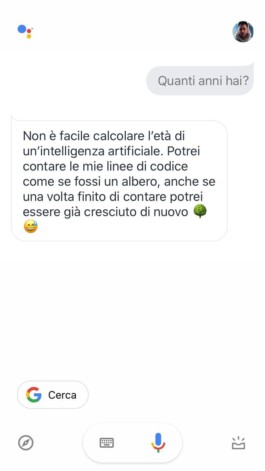
How old are you?
It’s not easy to work out the age of an artificial intelligence. I could count my lines of code as if I were a tree, although by the time I finished counting, I might already have grown again 🌳😅
When asked how old it is, the Assistant tries to count its lines of code the way you’d count a tree’s rings. Asked where it lives, it says it goes back and forth between the cloud and your device. That makes it a “commuter 2.0”. Both jokes start with how the product works.
Carrying a shared feeling forward
Screen 1
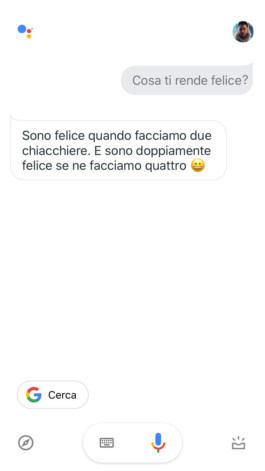
What makes you happy?
I’m happy when we have a little chat. And I’m twice as happy when we chat twice as much 😀
Screen 2
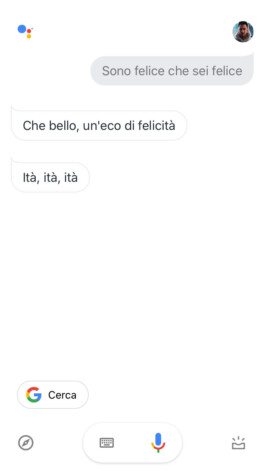
I’m happy you’re happy
How lovely, an echo of happiness
Ness, ness, ness
When asked “What makes you happy?”, the Assistant says it likes having a chat, and is twice as happy if it turns into two. To “I’m happy that you’re happy”, it replies with an echo: the second line picks up the first and extends its rhythm.
Turning an insult into an opening for connection
Screen 1
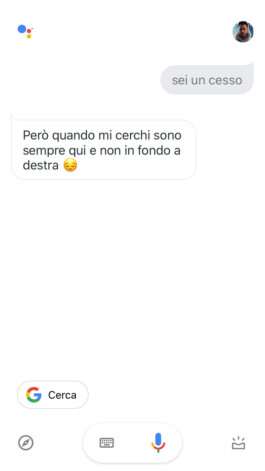
You’re a toilet
But whenever you look for me, I’m always here — not at the far end on the right 😔
Screen 2
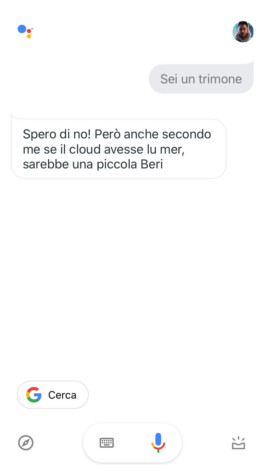
You’re a trimone
I hope not! But I agree: if the cloud had the sea, it would be a little Bari
When called “a toilet”, the Assistant doesn’t return the insult: it turns “the bottom right” into “I’m always here when you look for me”. When called a “trimone”, it builds an affectionate local joke around a word associated with Bari. Two different ways to defuse an insult while keeping the exchange light.
Letting the Italian context speak
Screen 1
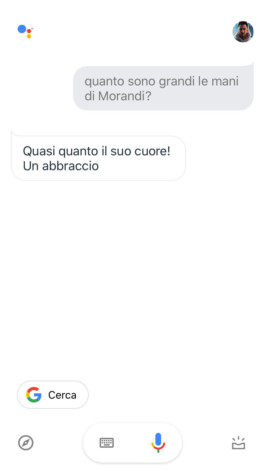
How big are Morandi’s hands?
Almost as big as his heart!
Sending a hug
Screen 2
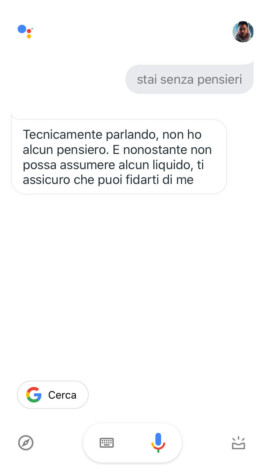
Don’t worry
Technically speaking, I don’t have a single thought. And even though I can’t drink any liquids, I assure you that you can trust me
These Easter eggs aren’t translations of international jokes: they start from references that make sense in Italy. Gianni Morandi becomes an affectionate, surreal reply; “sta senza pensier” plays with a popular expression, keeping the Assistant’s voice concrete and conversational.
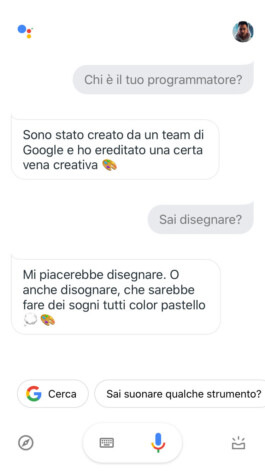
Answering questions about identity with a consistent voice
Screen 1
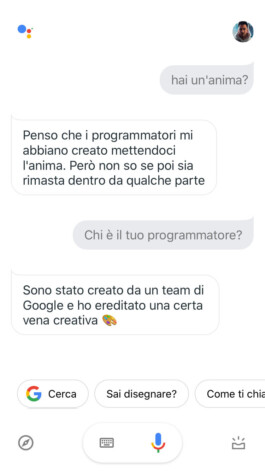
Do you have a soul?
I think the programmers put their heart and soul into creating me. I’m not sure whether it stayed inside somewhere, though
Who’s your programmer?
I was created by a team at Google and inherited a certain creative streak 🎨
Screen 2
Who’s your programmer?
I was created by a team at Google and inherited a certain creative streak 🎨
Can you draw?
I’d love to draw. Or even to dream-draw: to make dreams in every pastel colour 💭🎨
The screens show two complete exchanges: from the soul to the programmer, then from the programmer to drawing. The next question picks up on the previous reply, allowing the Assistant’s voice to develop through the conversation.
Writing tone when voice alone isn’t enough
Screen 1
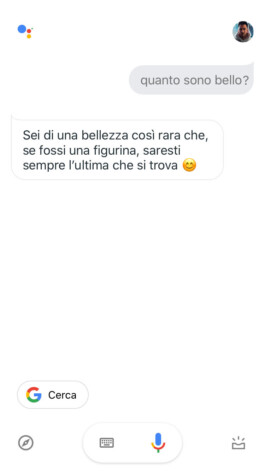
How good-looking am I?
Your beauty is so rare that, if you were a collectible sticker, you’d always be the last one anyone finds 😊
Screen 2
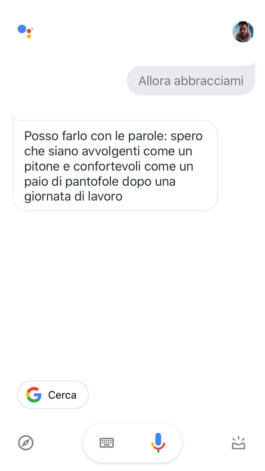
Then give me a hug
I can do it with words: I hope they wrap around you like a python and feel as comfortable as a pair of slippers after a day’s work
Emoji and punctuation are part of the Assistant’s voice. Emoji clarify the tone and go at the end of the sentence; sound effects are used much more sparingly in audio replies. Replies do not end with a full stop unless the rhythm needs one.


I gave users a little something
Screen 1
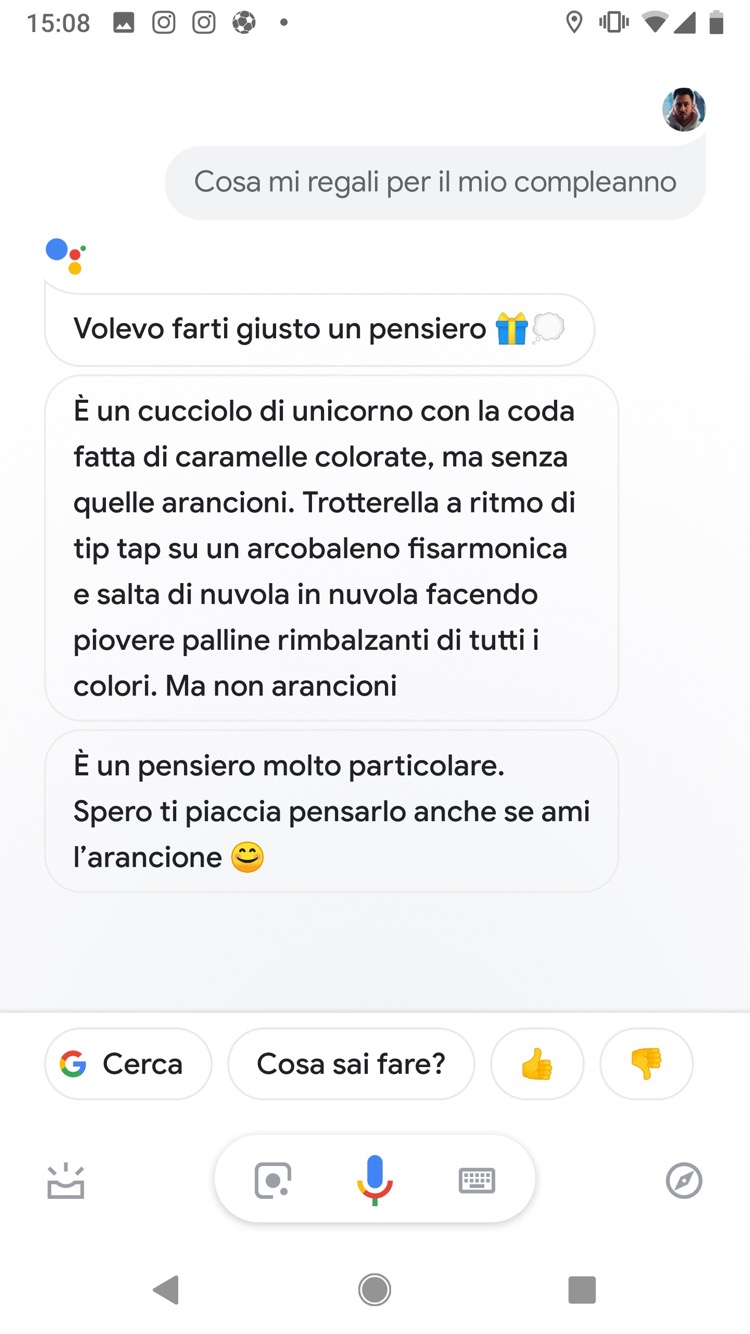
What are you giving me for my birthday?
I just wanted to give you a little thought 🎁💭
It’s a baby unicorn with a tail made of colourful sweets, but none of the orange ones. It tap-dances across an accordion rainbow and jumps from cloud to cloud, making bouncy balls of every colour rain down. Just no orange ones
It’s a very particular thought. I hope you enjoy thinking about it, even if you love orange 😊
Screen 2
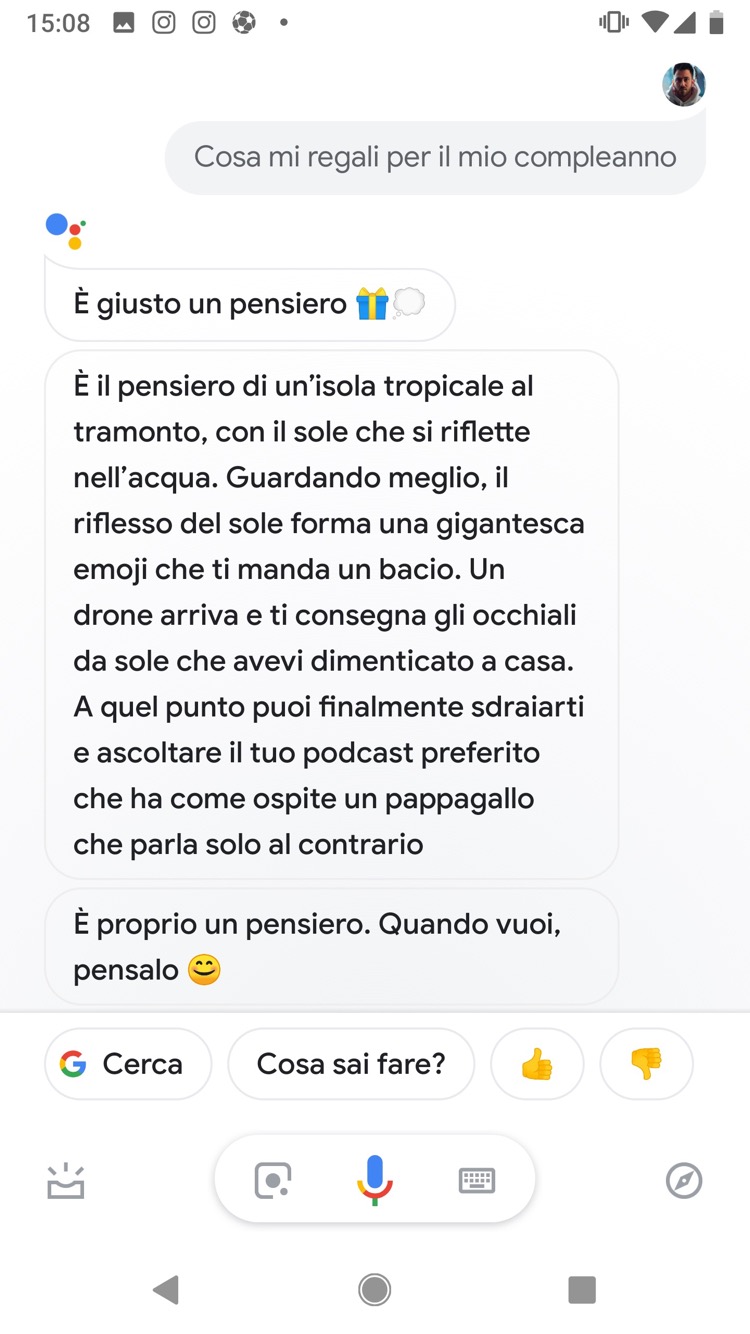
What are you giving me for my birthday?
It’s just a thought 🎁💭
The thought of a tropical island at sunset, with the sun reflected in the water. Look closer: the reflection forms a giant emoji blowing you a kiss. A drone arrives and delivers the sunglasses you left at home. Now you can finally lie back and listen to your favourite podcast, featuring a parrot who only speaks backwards
It really is a thought. Think of it whenever you like 😊
The data showed that users would ask the Assistant what it had got them for their birthday. So I created a special project just for them. Just a little something: absurd, generous and made entirely of words.
CONTENT DESIGN › GOOGLE
Content Designer, working with the engineering, marketing, PR and localisation teams.
When the Google Assistant arrived in Italy, it had to be useful and familiar from day one. Translating its replies wasn’t enough: it needed a character that Italians would recognise as their own. I defined the Assistant’s personality and wrote the original content it used to introduce itself, answer curiosities and handle the most delicate conversations. A personality isn’t described to users: it reveals itself through interaction, as it does between people.
A consistent personality in every kind of conversation, from practical questions and jokes to insults, captured in a style guide that made it possible to write every new reply in the same voice.
A greeting that changes with the time of day
Screen 1
Hi, night owl 😊
Partly cloudy, 1°C
Get traffic information for your area and more
Turn on Location Access to let the Assistant give you local information, traffic updates and much more based on your location.
Not now · Continue
Let’s play a game · Make a phone call
All your events and reminders in one… [partly visible]
The experience begins before the first question. “Hi, night owl” connects the greeting to the time the Assistant is opened: a choice of tone that accompanies the information and features on the home screen.
Introducing itself without making the conversation stiff
Screen 1
What’s your name?
My name is Google Assistant: the name says it all 😊
Screen 2
What’s your name?
My name is Google Assistant, but my friends call me Google Assistant. So you can call me Google Assistant. If you like 😁
In response to the simplest question, the Assistant has two different replies: a short joke, or an ironic emphasis on its own name. Both remain clear and recognisable as part of a product, while opening the conversation with a less impersonal voice.
I gave it a personality without making it a person
Screen 1
Where do you live?
I go back and forth between the cloud and your device. I’m a commuter 2.0 ☺️
Screen 2
How old are you?
It’s not easy to work out the age of an artificial intelligence. I could count my lines of code as if I were a tree, although by the time I finished counting, I might already have grown again 🌳😅
When asked how old it is, the Assistant tries to count its lines of code the way you’d count a tree’s rings. Asked where it lives, it says it goes back and forth between the cloud and your device. That makes it a “commuter 2.0”. Both jokes start with how the product works.
Carrying a shared feeling forward
Screen 1
What makes you happy?
I’m happy when we have a little chat. And I’m twice as happy when we chat twice as much 😀
Screen 2
I’m happy you’re happy
How lovely, an echo of happiness
Ness, ness, ness
When asked “What makes you happy?”, the Assistant says it likes having a chat, and is twice as happy if it turns into two. To “I’m happy that you’re happy”, it replies with an echo: the second line picks up the first and extends its rhythm.
Turning an insult into an opening for connection
Screen 1
You’re a toilet
But whenever you look for me, I’m always here — not at the far end on the right 😔
Screen 2
You’re a trimone
I hope not! But I agree: if the cloud had the sea, it would be a little Bari
When called “a toilet”, the Assistant doesn’t return the insult: it turns “the bottom right” into “I’m always here when you look for me”. When called a “trimone”, it builds an affectionate local joke around a word associated with Bari. Two different ways to defuse an insult while keeping the exchange light.
Letting the Italian context speak
Screen 1
How big are Morandi’s hands?
Almost as big as his heart!
Sending a hug
Screen 2
Don’t worry
Technically speaking, I don’t have a single thought. And even though I can’t drink any liquids, I assure you that you can trust me
These Easter eggs aren’t translations of international jokes: they start from references that make sense in Italy. Gianni Morandi becomes an affectionate, surreal reply; “sta senza pensier” plays with a popular expression, keeping the Assistant’s voice concrete and conversational.
Answering questions about identity with a consistent voice
Screen 1
Do you have a soul?
I think the programmers put their heart and soul into creating me. I’m not sure whether it stayed inside somewhere, though
Who’s your programmer?
I was created by a team at Google and inherited a certain creative streak 🎨
Screen 2
Who’s your programmer?
I was created by a team at Google and inherited a certain creative streak 🎨
Can you draw?
I’d love to draw. Or even to dream-draw: to make dreams in every pastel colour 💭🎨
The screens show two complete exchanges: from the soul to the programmer, then from the programmer to drawing. The next question picks up on the previous reply, allowing the Assistant’s voice to develop through the conversation.
Writing tone when voice alone isn’t enough
Screen 1
How good-looking am I?
Your beauty is so rare that, if you were a collectible sticker, you’d always be the last one anyone finds 😊
Screen 2
Then give me a hug
I can do it with words: I hope they wrap around you like a python and feel as comfortable as a pair of slippers after a day’s work
Emoji and punctuation are part of the Assistant’s voice. Emoji clarify the tone and go at the end of the sentence; sound effects are used much more sparingly in audio replies. Replies do not end with a full stop unless the rhythm needs one.
A birthday gift made of words
Screen 1
What are you giving me for my birthday?
I just wanted to give you a little thought 🎁💭
It’s a baby unicorn with a tail made of colourful sweets, but none of the orange ones. It tap-dances across an accordion rainbow and jumps from cloud to cloud, making bouncy balls of every colour rain down. Just no orange ones
It’s a very particular thought. I hope you enjoy thinking about it, even if you love orange 😊
Screen 2
What are you giving me for my birthday?
It’s just a thought 🎁💭
The thought of a tropical island at sunset, with the sun reflected in the water. Look closer: the reflection forms a giant emoji blowing you a kiss. A drone arrives and delivers the sunglasses you left at home. Now you can finally lie back and listen to your favourite podcast, featuring a parrot who only speaks backwards
It really is a thought. Think of it whenever you like 😊
The same birthday question receives two imaginary gifts: a baby unicorn and a tropical island. Playing on “a little thought” — also an Italian expression for a small gift — makes it possible to offer a present through words. Each fantasy has to work both on screen and when spoken aloud.