Content Design › Sky
Content Designer working with Dscovr, alongside UX researchers and UX designers.
Sky's transactional emails, from order confirmations to deliveries and engineer appointments, were often unclear and inconsistent, and didn't fully reflect the brand's personality. Communications from Sky TV and Sky Wifi felt as though they came from two completely different worlds.
I was brought in to understand what customers expected and help define a more consistent approach to communication. Sky Wifi's emails, which customers already appreciated, provided one of the starting points for redesigning Sky TV's emails.
I contributed to the research as a Content Designer, then developed the content guidelines and wrote the new emails.
Research involving 1,300 customers helped us identify the tone of voice best suited to Sky and define five email categories, each with its own communication style.
Building on these findings, I developed new transactional email templates and content design guidelines, creating a shared reference to make Sky TV communications clearer, more consistent and more recognisable.
It starts with listening
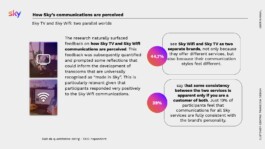
Before rewriting the emails, we involved 1,300 customers to understand how they perceived Sky's communications and what they expected from them.
44.7% saw Sky TV and Sky Wifi as two separate brands, while only 19% felt their communications were fully consistent. We needed to establish a recognisable voice that could bring them together without losing Sky's personality.
Giving a brand its personality
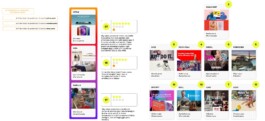
Asking people what tone of voice they expect from a brand can be too abstract. So I selected a range of familiar brands, linking each one to specific characteristics and real examples of their communications.
Participants chose those they felt best reflected Sky's personality, helping us identify three defining attributes for its communications: innovative, friendly and familiar.
Asking the right questions
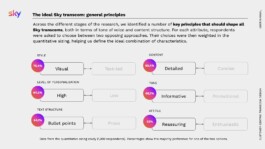
To turn people's preferences into practical writing guidelines, I identified six pairs of contrasting characteristics: visual or text-based, detailed or concise, highly or lightly personalised, informative or promotional, lists or continuous prose, reassuring or enthusiastic.
The responses, weighted across the sample of 1,300 customers, revealed clear preferences for communications that were visual (76.4%), detailed (63.4%), highly personalised (64.2%), informative (58.7%), structured as lists (64.1%) and reassuring (53%).
One voice, different tones
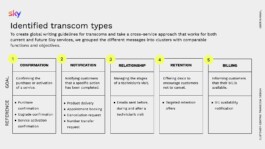
Not every email serves the same purpose. An order confirmation should offer reassurance, a notification should provide precise information, while a retention email should acknowledge the recipient's interests.
We therefore divided transactional emails into five categories: confirmation, notification, relationship, retention and billing, defining an appropriate tone for each stage of the customer journey. This allows communications to adapt to different situations while maintaining a recognisable brand personality.
What happens next?
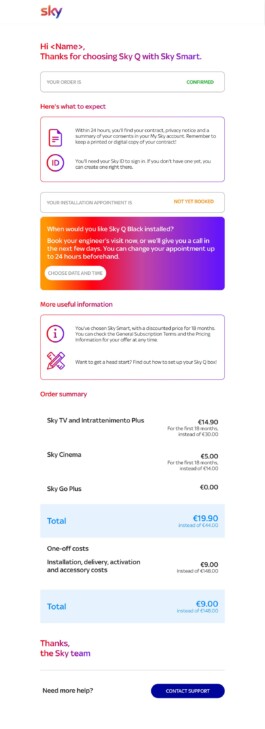
Research isn't just about deciding which information to include. It's also about understanding people's expectations, pain points and worries, then turning those insights into concrete content decisions. After placing an order, for example, confirmation alone isn't enough: customers also need to know what happens next.
That's why I led with the order status, “Confirmed”, followed by “Here's what to expect”. I set out the next steps, from activating a Sky ID to booking installation, and reorganised the cost breakdown to distinguish discounted prices from standard rates. 40.8% of customers had identified cost details as one of the most important pieces of information.
A delivery without surprises
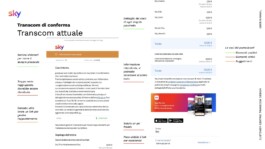
In the dispatch email, I again translated the questions and concerns surfaced by the research into specific content choices: when will the Sky box arrive, where will it be delivered and what will customers need to do next? I put the expected delivery date and address first, in separate, easy-to-scan sections.
I also made delivery times and the tracking link easier to find, as 43.3% of customers had asked for the ability to track their delivery. By explaining how to set up the Sky box in advance, I helped customers know what to expect and prepare before it arrived, rather than leaving them to work it out at the point of delivery.
Ready for the appointment
These communications, which manage the engineer’s visit, are part of the Sky Wifi fibre (FTTH) journey, but could apply to any situation that requires a home visit, where customers deal with someone in person.
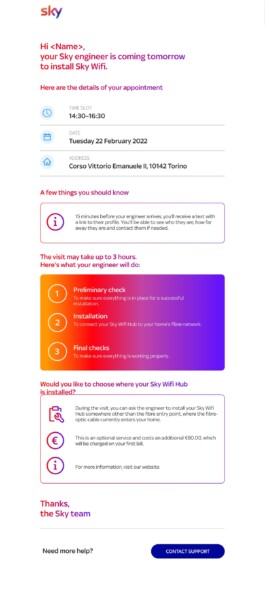
For Sky Wifi installation, 48.7% of customers considered the engineer's arrival date and time a priority, while 64% preferred to receive no more than two communications.
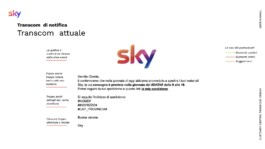
In the email sent the day before the appointment, I therefore prioritised the date, time slot and address, organising the content around customers' most pressing questions. I also explained what would happen during the visit, from the engineer's introductory text message to the installation process, including the €80 charge for an optional additional service.
Speaking their language
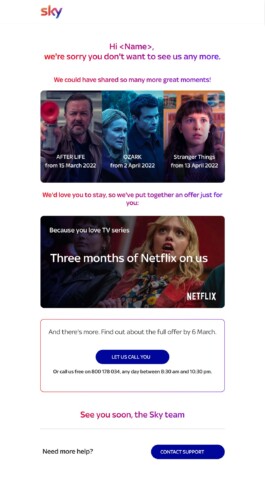
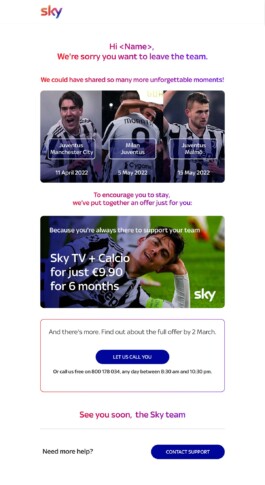
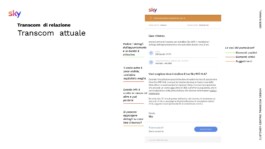
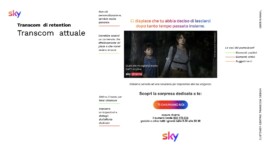
In retention communications, personalisation goes beyond the offer itself. 71.1% of customers wanted proposals tailored to their interests, so I made sure those interests were reflected in the writing too, starting with the email's headline.
I developed two versions: one for TV series fans, featuring a Netflix offer, and another for football fans, adapting the language and references to each audience: TV series fans “stop watching us”, football fans “leave the team”. Both acknowledge the customer's decision to leave Sky, maintain a friendly tone and present a time-limited offer without losing the brand's personality.
A guide for every email
The work didn't end with writing the email templates. I brought together the research findings and content design decisions into guidelines that could also be used for future communications.
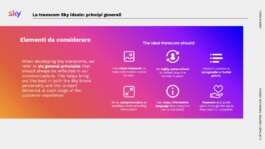
The document defines Sky's personality, the appropriate tone for different stages of the customer journey and six practical principles for writing clear, personalised and reassuring content. This turns decisions made for individual emails into a shared reference for all transactional communications.
Content Design › Sky
Content Designer working with Dscovr, alongside UX researchers and UX designers.
Sky's transactional emails, from order confirmations to deliveries and engineer appointments, were often unclear and inconsistent, and didn't fully reflect the brand's personality. Communications from Sky TV and Sky Wifi felt as though they came from two completely different worlds.
I was brought in to understand what customers expected and help define a more consistent approach to communication. Sky Wifi's emails, which customers already appreciated, provided one of the starting points for redesigning Sky TV's emails.
I contributed to the research as a Content Designer, then developed the content guidelines and wrote the new emails.
Research involving 1,300 customers helped us identify the tone of voice best suited to Sky and define five email categories, each with its own communication style.
Building on these findings, I developed new transactional email templates and content design guidelines, creating a shared reference to make Sky TV communications clearer, more consistent and more recognisable.
It starts with listening
Before rewriting the emails, we involved 1,300 customers to understand how they perceived Sky's communications and what they expected from them.
44.7% saw Sky TV and Sky Wifi as two separate brands, while only 19% felt their communications were fully consistent. We needed to establish a recognisable voice that could bring them together without losing Sky's personality.
Giving a brand its personality
Asking people what tone of voice they expect from a brand can be too abstract. So I selected a range of familiar brands, linking each one to specific characteristics and real examples of their communications.
Participants chose those they felt best reflected Sky's personality, helping us identify three defining attributes for its communications: innovative, friendly and familiar.
Asking the right questions
To turn people's preferences into practical writing guidelines, I identified six pairs of contrasting characteristics: visual or text-based, detailed or concise, highly or lightly personalised, informative or promotional, lists or continuous prose, reassuring or enthusiastic.
The responses, weighted across the sample of 1,300 customers, revealed clear preferences for communications that were visual (76.4%), detailed (63.4%), highly personalised (64.2%), informative (58.7%), structured as lists (64.1%) and reassuring (53%).
One voice, different tones
Not every email serves the same purpose. An order confirmation should offer reassurance, a notification should provide precise information, while a retention email should acknowledge the recipient's interests.
We therefore divided transactional emails into five categories: confirmation, notification, relationship, retention and billing, defining an appropriate tone for each stage of the customer journey. This allows communications to adapt to different situations while maintaining a recognisable brand personality.
What happens next?
Research isn't just about deciding which information to include. It's also about understanding people's expectations, pain points and worries, then turning those insights into concrete content decisions. After placing an order, for example, confirmation alone isn't enough: customers also need to know what happens next.
That's why I led with the order status, “Confirmed”, followed by “Here's what to expect”. I set out the next steps, from activating a Sky ID to booking installation, and reorganised the cost breakdown to distinguish discounted prices from standard rates. 40.8% of customers had identified cost details as one of the most important pieces of information.
A delivery without surprises
In the dispatch email, I again translated the questions and concerns surfaced by the research into specific content choices: when will the Sky box arrive, where will it be delivered and what will customers need to do next? I put the expected delivery date and address first, in separate, easy-to-scan sections.
I also made delivery times and the tracking link easier to find, as 43.3% of customers had asked for the ability to track their delivery. By explaining how to set up the Sky box in advance, I helped customers know what to expect and prepare before it arrived, rather than leaving them to work it out at the point of delivery.
Ready for the appointment
These communications, which manage the engineer’s visit, are part of the Sky Wifi fibre (FTTH) journey, but could apply to any situation that requires a home visit, where customers deal with someone in person.
For Sky Wifi installation, 48.7% of customers considered the engineer's arrival date and time a priority, while 64% preferred to receive no more than two communications.
In the email sent the day before the appointment, I therefore prioritised the date, time slot and address, organising the content around customers' most pressing questions. I also explained what would happen during the visit, from the engineer's introductory text message to the installation process, including the €80 charge for an optional additional service.
Speaking their language
In retention communications, personalisation goes beyond the offer itself. 71.1% of customers wanted proposals tailored to their interests, so I made sure those interests were reflected in the writing too, starting with the email's headline.
I developed two versions: one for TV series fans, featuring a Netflix offer, and another for football fans, adapting the language and references to each audience: TV series fans “stop watching us”, football fans “leave the team”. Both acknowledge the customer's decision to leave Sky, maintain a friendly tone and present a time-limited offer without losing the brand's personality.
A guide for every email
The work didn't end with writing the email templates. I brought together the research findings and content design decisions into guidelines that could also be used for future communications.
The document defines Sky's personality, the appropriate tone for different stages of the customer journey and six practical principles for writing clear, personalised and reassuring content. This turns decisions made for individual emails into a shared reference for all transactional communications.