• CV
  • Contact
  • Italiano
  • CV
  • Contact
  • Italiano

Content Design › Tate

Billsplainer

Sole content designer, working alongside a UX designer and a growth product manager.

Energy bills are packed with information, and each supplier can structure them differently. When people switch suppliers, they have to learn how to read a new document, which can be frustrating and confusing. I created Billsplainer, a guide that accompanies new customers’ first bills and shows them where to find the information they need.

It remained in use throughout my time working with Tate, without any revisions.

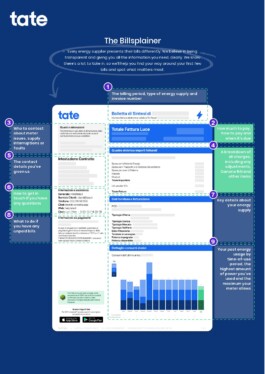
First page of the Billsplainer: the Italian bill with nine numbered notes showing where to find each piece of information

First page

What matters most comes first

Working with the team, I identified which information mattered most, and we highlighted it in green. I then studied each item in detail to explain it in just one or two sentences. I followed the same process for gas bills.
  1. The billing period, type of energy supply and invoice number
  2. How much to pay, how to pay and when it’s due
  3. Who to contact about meter issues, supply interruptions or faults
  4. A breakdown of all charges, including any adjustments, Canone RAI and other items
  5. The contact details you’ve given us
  6. How to get in touch if you have any questions
  7. Key details about your energy supply
  8. What to do if you have any unpaid bills
  9. Your past energy usage by time-of-use period, the highest amount of power you’ve used and the maximum your meter allows
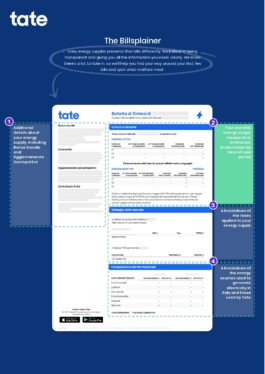
Second page of the Billsplainer: the Italian bill with four numbered notes on energy use, taxes and energy mix

Second page

Simple, even where it’s technical

The second page is the most technical, covering energy use by time band, taxes and the energy mix. Even so, I managed to keep the explanations simple.

  1. Additional details about your energy supply, including Bonus Sociale and Aggiornamento Corrispettivi
  2. Your monthly energy usage, measured or estimated, broken down by time-of-use period
  3. A breakdown of the taxes applied to your energy supply
  4. A breakdown of the energy sources used to generate electricity in Italy and those used by Tate

Content Design › Tate

Billsplainer

Sole content designer, working alongside a UX designer and a growth product manager.

Energy bills are packed with information, and each supplier can structure them differently. When people switch suppliers, they have to learn how to read a new document, which can be frustrating and confusing. I created Billsplainer, a guide that accompanies new customers’ first bills and shows them where to find the information they need.

It remained in use throughout my time working with Tate, without any revisions.

First page of the Billsplainer: the Italian bill with nine numbered notes showing where to find each piece of information

First page

What matters most comes first

Working with the team, I identified which information mattered most, and we highlighted it in green. I then studied each item in detail to explain it in just one or two sentences. I followed the same process for gas bills.

  1. The billing period, type of energy supply and invoice number
  2. How much to pay, how to pay and when it’s due
  3. Who to contact about meter issues, supply interruptions or faults
  4. A breakdown of all charges, including any adjustments, Canone RAI and other items
  5. The contact details you’ve given us
  6. How to get in touch if you have any questions
  7. Key details about your energy supply
  8. What to do if you have any unpaid bills
  9. Your past energy usage by time-of-use period, the highest amount of power you’ve used and the maximum your meter allows
Second page of the Billsplainer: the Italian bill with four numbered notes on energy use, taxes and energy mix

Second page

Simple, even where it’s technical

The second page is the most technical, covering energy use by time band, taxes and the energy mix. Even so, I managed to keep the explanations simple.

  1. Additional details about your energy supply, including Bonus Sociale and Aggiornamento Corrispettivi
  2. Your monthly energy usage, measured or estimated, broken down by time-of-use period
  3. A breakdown of the taxes applied to your energy supply
  4. A breakdown of the energy sources used to generate electricity in Italy and those used by Tate